🌟 Introduction: Why Failure is the Fuel for Innovation
🔥 Failure is not the opposite of success — it is the stepping stone to it.
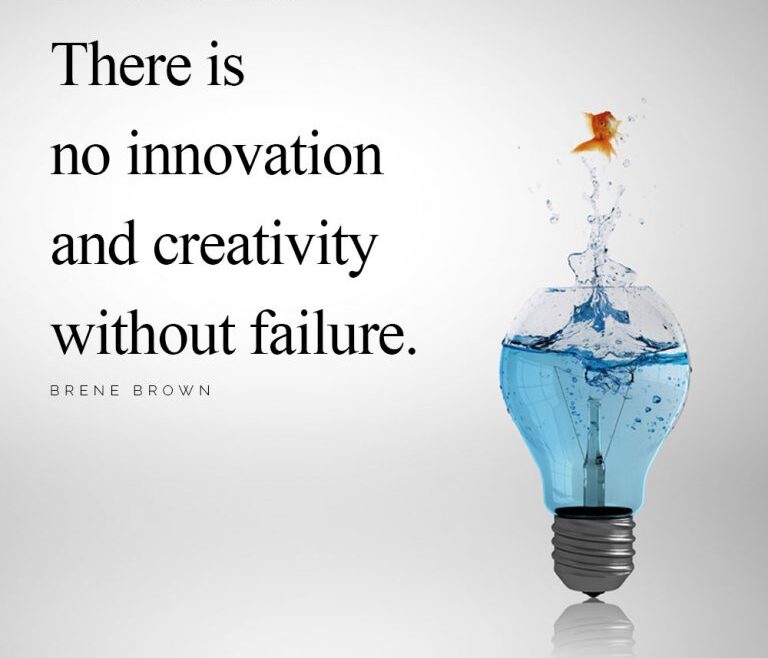
Every world-changing idea, invention, or business was once a “failure” in someone’s eyes. Brene Brown’s statement, “There is no innovation and creativity without failure,” is not just inspiring — it’s scientifically and practically true.
Consider how innovators approach failure: not as a dead-end, but as data, feedback, and a roadmap. This mindset separates average professionals from top achievers, ordinary teams from industry leaders, and stagnant companies from billion-dollar empires.
Why failure matters:
Encourages experimentation and creativity 💡
Reveals hidden opportunities 🔎
Forces adaptation and growth 🚀
- We’ll explore how top companies, entrepreneurs, and innovators use failure strategically, turning setbacks into breakthroughs, and how you can do the same in your career or business.
🔍 Understanding the Role of Failure in Creativity
Failure is the fuel of creativity. Without failure, ideas are never tested, and true innovation cannot emerge.
Key Insights:
Failure as Feedback: Mistakes show what works and what doesn’t 🔄
Failure Promotes Risk-Taking: Being unafraid to fail opens doors to unconventional ideas 🌟
Failure Builds Resilience: Each setback strengthens problem-solving and adaptability 💪
Quote:
“I have not failed. I’ve just found 10,000 ways that won’t work.” – Thomas Edison
🌟 Real-World Examples: How Failure Sparks Innovation
🍏 Apple iPhone Journey
Initial iPhone lacked 3G and a front camera 📱
Criticized as flawed, but Apple iterated and improved
Lesson: Initial failure is data for iteration
🚀 SpaceX Falcon Rockets
Multiple launch failures
Failures provided critical engineering data
Today, SpaceX dominates private aerospace innovation
Lesson: Failure accelerates learning
📝 Post-it Notes by 3M
Weak adhesive considered a “failed” experiment
Became Post-it Notes, a global icon
Lesson: Sometimes failure is disguised opportunity
📊 Data-Driven Insights: Failure as a Strategic Advantage
90% of startups fail, but learning from these failures differentiates winners
Harvard Business Review: Fail-fast cultures innovate 30% more effectively
MIT Report: Teams encouraged to experiment and fail generate 50% more novel ideas
Table: Failure vs. Innovation Outcomes
| Approach | Outcome | Key Insight |
|---|---|---|
| Avoid Failure | Stagnation | No innovation |
| Punish Failure | Risk-Aversion | Low creativity |
| Embrace Failure | Learning & Iteration | High innovation |
🛠️ Strategies to Leverage Failure for Innovation
Fail Fast, Learn Faster – Prototype quickly, test ideas, iterate 🔄
Create a Culture That Embraces Failure – Reward risk-taking and learning 🏆
Analyze and Iterate – Extract lessons and refine approach 🧩
Use Failure as Inspiration – Let mistakes guide creativity 💡
💡 Pro Tip: Track “failed” experiments in a failure log — patterns reveal innovation opportunities
📚 Case Studies: Failure That Transformed Industries
📧 Google 20% Time Policy
Gmail, AdSense born from side projects
Early failures fueled later success
🌀 Dyson Vacuum Cleaners
5,127 prototypes before success
Failure guided product excellence
🎬 Netflix Streaming Transformation
Early DVD model failures prompted pivot to streaming
Became a global leader
💡 Life Lessons from Failure for Personal Growth
Stop fearing failure; start learning from it 🚀
Treat mistakes as experiments 🔄
Build resilience 💪
Celebrate small wins between failures 🎉
Leverage failures as wisdom 📚
Quote:
“Failure is the condiment that gives success its flavor.” – Truman Capote
🎯 Actionable Ideas to Apply Immediately
Daily Experimentation: Try one new approach at work or life 🧪
Reflective Journaling: Document failures, lessons, next steps 📓
Peer Feedback Loops: Share failures openly, brainstorm improvements 🤝
Mini-Prototyping: Test ideas on a small scale before full execution ⚡
Celebrate Iterations: Reward learning from mistakes 🏅
🌐 Real-Time Success Stories
Sara Blakely (Spanx): Rejected by thousands of investors; persistence → $1.2B success 💰
Thomas Edison: 1,000+ failed light bulb attempts → global revolution 💡
Jeff Bezos (Amazon): Early failures in Fire Phone & Amazon Auctions → lessons for e-commerce domination 📦
📌 Conclusion: Failure as the Gateway to Creativity
Failure is the secret weapon of innovators 💥
Every product, company, or idea carries the DNA of failure 🧬
Embrace it to:
Unlock creativity 🎨
Accelerate learning 📈
Build resilience 💪
Final Quote: “Success is built on a mountain of failures.”
💡 Your thoughts can inspire ! Comment below and share this post to help others learn and grow.
⚠️ Disclaimer:
All quotes, insights, references and ideas shared in this work are the intellectual property of their respective authors, creators and thought leaders. Full respect and gratitude are extended to each original source for their timeless wisdom and inspiration. This compilation is created solely to educate, inspire and honour the brilliance of these great minds — with no claim of ownership over their original works.
All content, quotes, images, data and insights on this blog are for educational, informational and inspirational purposes only. This is not professional advice (legal, medical, financial, or otherwise). Accuracy is intended but no guarantees are made regarding completeness or reliability.
Images and visuals are sourced from Google Images, AI-generated designs, or royalty-free platforms (Unsplash / Pexels / Pixabay), with rights belonging to their respective owners.
This post may contain affiliate links, which help support the blog at no extra cost to you. Recommendations reflect genuine value, not sponsorship bias.
By reading, sharing or using this content, you acknowledge and agree that the author is not liable for any outcomes resulting from the use of information or links.