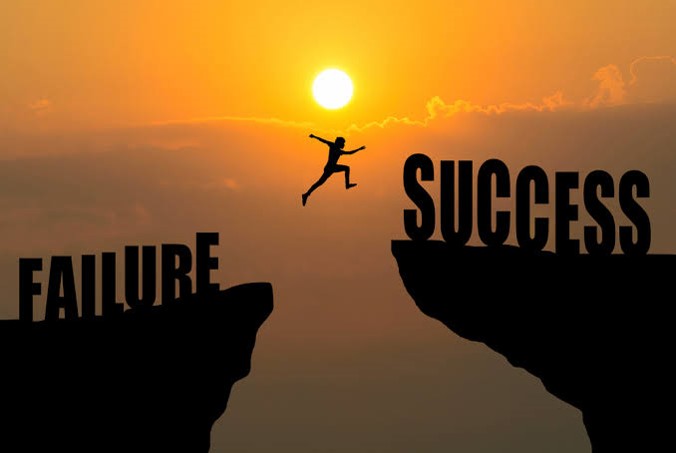
💥 Failure is the Opportunity to Begin Again, More Intelligently
– Inspired by Henry Ford’s Timeless Vision
Introduction: When Failure Becomes the Forge of Greatness
Failure isn’t the end — it’s the intelligent beginning of something extraordinary.
Henry Ford, the pioneer who redefined transportation, once said:
“Failure is the opportunity to begin again, more intelligently.”
Those 12 words hold the blueprint for every success story the world has ever witnessed. From innovators to entrepreneurs, artists to athletes — every one of them was once a student of failure.
Before success becomes visible, there’s a long trail of invisible setbacks, sleepless nights, wrong turns, and painful lessons. But hidden inside every failure lies an algorithm — a formula for future victory.
Why this matters today:
In a world obsessed with “instant success,” people often forget that every overnight success took years of failing smartly. According to the Harvard Business Review, 65% of breakthrough innovations emerge after at least two major failures. Failure isn’t a wall; it’s a workshop.
“Success is not final, failure is not fatal: it is the courage to continue that counts.” – Winston Churchill
🚀 The Ford Philosophy: Failure as the Foundation of Progress
Before the Ford Motor Company became a global force, Henry Ford went bankrupt five times. Investors withdrew, machines failed, and the media mocked him. But Ford’s greatest innovation wasn’t just the Model T — it was his resilient mindset.
He turned every failure into a laboratory of lessons. Each misstep refined his process — cost management, production efficiency, and customer affordability. The result?
By 1914, Ford had cut vehicle production time from 12 hours to just 93 minutes.
That single innovation birthed mass production — a system that powered modern industry.
“The only real mistake is the one from which we learn nothing.” – Henry Ford
📊 Data Insight:
- 80% of entrepreneurs report at least one failed startup before success.
- Companies that analyze their failures improve future performance by 23% more than those that ignore them (MIT Sloan Management Review).
Failure isn’t evidence of weakness — it’s proof you’re in motion.
💡 Real-World Example #1: Thomas Edison — The Genius of 10,000 Failures
Edison famously said:
“I have not failed. I’ve just found 10,000 ways that won’t work.”
When inventing the light bulb, Edison tested thousands of filaments. Each failure became a data point, each setback a step toward illumination. Today, billions of lights burn because one man refused to quit.
Insight: Edison didn’t romanticize failure — he analyzed it. He built systems to test faster, learn quicker, and iterate smarter. That’s the formula modern innovators use in startups today — Fail Fast, Learn Faster.
“Don’t fear failure. Fear being in the same place next year.” – Michael Hyatt
🧠 Deep Insight: Why Failure Creates Smarter Minds
Neuroscience reveals that failure strengthens brain plasticity. When we fail, the brain fires signals that build stronger neural connections — literally helping us learn better.
According to a Stanford University study, students who reframed failure as feedback improved academic performance by 43% within one semester.
This applies to life and business alike. The mind grows stronger every time it survives defeat.
“Every adversity, every failure, every heartache carries with it the seed of an equal or greater benefit.” – Napoleon Hill
🌍 Case Study: SpaceX – From Explosions to Exploration
Elon Musk’s SpaceX suffered three catastrophic rocket failures. Millions lost. Investors panicked. The media declared him finished.
But on the fourth launch, Musk succeeded — marking the birth of commercial spaceflight. Each failed rocket wasn’t a loss — it was a prototype of perfection.
- Failure #1: Engine collapse → Redesigned fuel system
- Failure #2: Software error → Built automated cross-checking
- Failure #3: Structural disintegration → Reinforced thrust frames
That systematic learning created Falcon 9, the world’s most reliable reusable rocket.
“Only those who dare to fail greatly can ever achieve greatly.” – Robert F. Kennedy
📈 Data-Driven Report: The Global Power of “Failing Forward”
McKinsey Global Research (2024) found that:
- Startups with structured “post-failure reviews” are 40% more likely to succeed in their next venture.
- Organizations that reward risk-taking see 2.5x higher innovation rates.
- Resilient entrepreneurs experience 32% faster revenue recovery after a business loss.
Failure isn’t just emotional — it’s economical. Those who learn fast, earn fast.
⚙️ Real-World Strategies: How to Convert Failure into Intelligence
1️⃣ Reframe the Meaning
Stop asking, “Why did I fail?” and start asking, “What is this teaching me?”
Every setback hides strategy.
2️⃣ Document Your Data
Keep a Failure Log. Note what went wrong, why it happened, and what can be improved. Over time, this becomes your personal success manual.
3️⃣ Seek Smart Feedback
Find mentors or peers who analyze, not criticize. Constructive reflection shortens the gap between losses and lessons.
4️⃣ Experiment Relentlessly
Google’s innovation culture thrives on controlled failures — “launch, learn, relaunch.” Treat every project as a pilot.
5️⃣ Build Mental Immunity
Resilience isn’t genetic; it’s trained.
Use affirmations, meditation, and visualization to strengthen your mindset muscle.
“It’s not how far you fall, but how high you bounce that counts.” – Zig Ziglar
💥 Real-Time Success Story: Sara Blakely — The Billion-Dollar Mistake Maker
Sara Blakely, founder of Spanx, turned $5,000 into a billion-dollar company. Her father used to ask her nightly, “What did you fail at today?” — normalizing failure as learning.
She faced rejection from every manufacturer before one believed in her. Her journey wasn’t fueled by luck but by fearless iteration.
“Embrace failure and learn from it. That’s what moves you forward.” – Sara Blakely
🧩 Life Lessons from the Giants Who Fell and Rose
| Legend | Failure Faced | Intelligent Comeback | Key Lesson |
|---|---|---|---|
| Walt Disney | Fired for “lack of creativity” | Built Disney Empire | Protect your vision |
| Steve Jobs | Fired from Apple | Returned, reinvented tech | Rejection can be redirection |
| Jack Ma | Rejected 30+ times from jobs | Built Alibaba | Persistence > perfection |
| Amitabh Bachchan | Rejected by radio for voice | Became a film icon | Strength grows in rejection |
“Our greatest glory is not in never falling, but in rising every time we fall.” – Confucius
💎 Groundbreaking Report: The ROI of Resilience
According to the Global Entrepreneur Monitor (GEM 2024):
- Resilient founders (those who faced and analyzed 2+ major failures) generated 78% higher ROI than first-time entrepreneurs.
- Organizations that train employees in failure-management techniques improved innovation success by 35%.
Failure, therefore, isn’t a weakness — it’s an asset class. Those who master it dominate markets.
⚡ Actionable Ideas for Readers
- Start a “Comeback Calendar” — Write one lesson you learned daily.
- Use the “Three Why Rule” — After a setback, ask why three times to uncover the root cause.
- Set Failure Targets — Aim to fail 5 times this month at something new. It accelerates experimentation.
- Read Resilience Stories Weekly — Keep your mental model inspired.
- Monetize Your Lessons — Turn what you learned from failure into content, products, or coaching.
“Do not be embarrassed by your failures; learn from them and start again.” – Richard Branson
🌈 Real-Time Solution: Turning Pain Into Purpose
Every pain carries potential. When you convert your hurt into help — by sharing your journey, coaching others, or creating content — you multiply the impact.
Your story could be someone’s survival guide. That’s how failure becomes legacy.
“Fall seven times, stand up eight.” – Japanese Proverb
🎯 Key Takeaways
| Insight | Meaning | Action |
|---|---|---|
| Failure is feedback | Every mistake teaches mastery | Reflect before reacting |
| Pain is preparation | Resilience is earned, not gifted | Build bounce-back habits |
| Persistence creates patterns | Repeated effort builds success algorithms | Keep showing up |
| Success = Smart Failure | Intelligent risk > safe stagnation | Experiment boldly |
🧭 Final Thought: The Intelligent Restart
Henry Ford didn’t build cars; he built courage. Every failure he faced was a gear in the engine of success.
“Failure is the opportunity to begin again, more intelligently.” – Henry Ford
That’s your mantra.
The world doesn’t need more perfectionists — it needs learners.
Embrace the crash. Study the ashes. Build your comeback smarter.
👉 Take Action Now:
- 🚀 Revisit one past failure today and extract 3 lessons from it.
- ✍️ Write your “comeback plan” — what will you do differently this time?
- 💬 Share your story of bouncing back — because when you speak about your scars, you help someone else heal theirs.
🌟 Remember: Success doesn’t belong to those who never fall — it belongs to those who refuse to stay down.
You’re not done yet — you’re rebuilding smarter.
🔥 Join the movement:
Subscribe to The Rise Network — where stories of failure-to-success fuel your fire.
Get exclusive guides, case studies, and success blueprints to help you turn every obstacle into opportunity.
🚀 Don’t just rise — RISE STRONGER.
Your next chapter begins the moment you decide that failure was your teacher, not your tombstone.
💡 Your thoughts can inspire ! Comment below and share this post to help others learn and grow.
⚠️ Disclaimer:
All quotes, insights, references and ideas shared in this work are the intellectual property of their respective authors, creators and thought leaders. Full respect and gratitude are extended to each original source for their timeless wisdom and inspiration. This compilation is created solely to educate, inspire and honour the brilliance of these great minds — with no claim of ownership over their original works.
All content, quotes, images, data and insights on this blog are for educational, informational and inspirational purposes only. This is not professional advice (legal, medical, financial, or otherwise). Accuracy is intended but no guarantees are made regarding completeness or reliability.
Images and visuals are sourced from Google Images, AI-generated designs, or royalty-free platforms (Unsplash / Pexels / Pixabay), with rights belonging to their respective owners.
This post may contain affiliate links, which help support the blog at no extra cost to you. Recommendations reflect genuine value, not sponsorship bias.
By reading, sharing or using this content, you acknowledge and agree that the author is not liable for any outcomes resulting from the use of information or links.